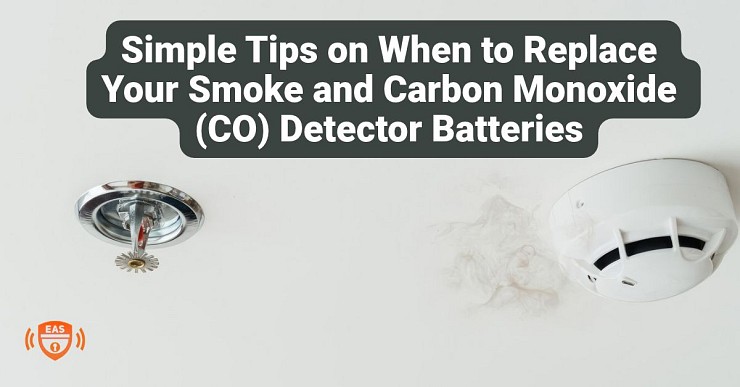
Simple Tips on When to Replace Your Smoke and Carbon Monoxide (CO) Detector Batteries
Smoke and carbon monoxide detectors need a reliable power source to function properly. The simplest rule to remember is to test your alarms at least once a month and respond immediately to low-battery warnings. However, not every detector follows the same replacement schedule. Battery requirements depend on the manufacturer, model, and whether the device uses replaceable batteries, sealed batteries, or a hardwired power connection.
For anyone researching a commercial fire alarm setup or an alarm system in Toronto, understanding these differences is an important part of keeping fire and life safety equipment properly maintained.
What the City of Toronto Recommends
The City of Toronto recommends testing smoke alarms monthly to confirm they are functioning properly. If an alarm with a replaceable battery begins chirping because of a low battery, replace it immediately rather than waiting for your next scheduled maintenance check.
For applicable smoke alarms with replaceable batteries, changing the batteries twice a year, around the spring and fall clock changes, is a useful reminder. However, the manufacturer's instructions should always take priority.
Some smoke alarms have sealed, non-replaceable batteries designed to last for the unit's service life. These batteries should not be removed or replaced separately.
Smoke alarms generally need to be replaced after 10 years, or sooner if specified by the manufacturer. A chirping alarm can also indicate a fault or end-of-life warning, so it's important to check the device's instructions rather than assume the battery is always the problem.
Carbon Monoxide Detectors Run on a Slightly Different Schedule
Carbon monoxide detectors also require regular testing, but their battery replacement requirements may differ from those of smoke alarms.
Ontario guidance recommends testing CO alarms monthly and replacing applicable removable batteries at least annually, or according to the manufacturer's instructions.
Some CO detectors have sealed batteries, while others are hardwired or connected to an alarm system with backup power.
The detector itself must also be replaced when it reaches the end of its manufacturer-specified service life. Unlike the general 10-year replacement guidance for smoke alarms, CO detector replacement intervals vary by model.
If a CO detector displays a fault or end-of-life warning, follow the manufacturer's instructions promptly. If the CO alarm activates, treat it as a potential emergency, move to fresh air, and contact emergency services.
Does the Brand of Your Smoke or CO Detector Affect Battery Replacement?
Battery replacement and maintenance requirements can vary depending on the manufacturer, detector model, and type of alarm system installed.
At Engineered Alarm Solutions Inc., we work with established fire detection and security system brands, including:
Johnson Controls
DSC
2GIG
Fire-Lite System Sensor
Alula
These manufacturers offer different types of alarm panels, detectors, and related equipment. Not every device uses a replaceable battery, and some detectors receive power from a connected alarm system.
Because of these differences, it's important to identify the equipment installed at your property before establishing a maintenance schedule. Our team can help property owners understand their equipment and determine which testing, battery maintenance, and replacement requirements apply.
What Alarm Monitoring Adds
Our monitoring partner, Lanvac, operates six monitoring stations across Canada, providing additional redundancy for alarm monitoring.
Rather than depending entirely on a single monitoring location, this arrangement helps maintain monitoring capabilities if one station experiences an interruption.
This is particularly important for monitored fire alarm systems, where timely communication of an alarm signal can help initiate an appropriate emergency response.
However, monitoring does not replace regular detector testing, battery maintenance, or required fire alarm inspections. The equipment must still function properly to detect a problem and transmit the appropriate signal.
Why a Monitored System Adds a Layer Beyond the Battery
A standard standalone smoke alarm produces an audible warning inside the property. While this can alert occupants to a potential fire, someone must be close enough to hear and respond to it.
Our smoke detectors can be integrated with compatible monitored alarm systems, allowing alarm signals to be transmitted to a monitoring station even when nobody is on-site.
Depending on the system configuration, the monitoring station can then follow the established emergency response procedures, including contacting emergency services when appropriate.
This additional protection can be particularly valuable for commercial properties, vacation homes, and buildings that remain unoccupied overnight.
However, a monitored system still depends on properly functioning detectors, reliable power, and routine maintenance. Monitoring and battery replacement should work together rather than being treated as alternatives.
What This Looks Like for Commercial Properties
Commercial fire detection requirements are different from those of a typical residential property.
Depending on the building's occupancy, size, layout, and applicable Ontario Fire Code requirements, a commercial property may need an interconnected fire alarm system, specific detection equipment, emergency lighting, and other fire protection measures.
These systems often include devices connected to a central fire alarm control panel rather than individual battery-operated alarms.
At Engineered Alarm Solutions Inc., our annual fire inspections can include equipment such as emergency lights, fire extinguishers, sprinkler systems, pull stations, fire hoses, and smoke detectors, depending on the services and systems involved.
However, annual inspections do not necessarily replace other required testing or maintenance. Certain fire alarm components and emergency systems may require more frequent checks under applicable codes and manufacturer instructions.
For commercial property owners, the most effective approach is to maintain a documented inspection and maintenance schedule that identifies:
Which detectors and alarm devices are installed
Whether devices use individual batteries or system backup power
When batteries and equipment require replacement
Which monthly, annual, or other inspections are required
Who is responsible for completing and documenting each task
This helps reduce the risk of overlooked maintenance, particularly in larger buildings with multiple floors, tenants, or detection zones.
Keeping Both Systems on Schedule
Testing your smoke and carbon monoxide detectors regularly and replacing batteries according to manufacturer recommendations are simple but important steps toward maintaining a safer property.
For commercial buildings and properties with monitored alarm systems, maintenance also involves checking connected equipment, backup power supplies, and compliance with applicable inspection requirements.
At Engineered Alarm Solutions Inc., we help homeowners and businesses understand their fire detection and alarm system needs, from equipment selection and installation to monitoring and inspections.
If you're considering an alarm system in Toronto or need assistance with a commercial fire alarm setup, contact our team to discuss your property and the maintenance requirements for your existing or proposed system.
Contact our team to better understand your options or to book a site visit with our specialists.
When you run a business, it’s critical to protect your valuable assets and safeguard both your employees and customers with commercial security systems. While security camera installation is a good first step in protecting your operation, a comprehensive security system in Toronto consists of...
With a proper business security camera installation, you can have peace of mind knowing your valuable assets and sensitive data are effectively protected. Commercial security cameras in Toronto are in high demand.